Understanding Asthma and Allergies
Allergies occur when the immune system perceives harmless substances like pollen as dangerous and reacts to them, causing allergy symptoms (Mayo Clinic Staff, 2025a). Allergies can have various triggers such as pet dander, dust mites, pollen (Mayo Clinic Staff, 2025a), food, medications, insects, pets, and mold (ENT & Allergy Associates, 2026). Some common symptoms are nasal congestion, a runny nose, itchy eyes, and skin reactions (Mayo Clinic Staff, 2025a). Some immune system reactions can affect the airways and lungs, causing asthma symptoms (Mayo Clinic Staff, 2025a). Skin and food allergies can also, in some cases, trigger asthma (Mayo Clinic Staff, 2025a).
Asthma is a chronic disease in which the airways narrow, making it hard to breathe (Mayo Clinic Staff, 2025b). Common asthma symptoms include frequent coughing, wheezing, shortness of breath, chest tightness, and sleep problems caused by these symptoms (Mayo Clinic Staff, 2025b). However, asthma can occur independently of allergies, and its triggers can include exercise, cold air, stress (Mayo Clinic Staff, 2025b), smoke, respiratory infections, and certain medications (Mayo Clinic Staff, 2025b). Asthma affects people differently. For some people, asthma symptoms occur less frequently and are triggered by certain activities or situations, while others experience them more often (Mayo Clinic Staff, 2025b).
Asthma and Allergies in the United States
About 28 million people in the U.S. have asthma. Black and Indigenous adults are also at a higher risk for this disease. Approximately 5 million children in the U.S. have asthma, and male children may be slightly more likely to develop the illness, while female adults may be more vulnerable to asthma than male adults (Asthma and Allergy Foundation of America, 2026). One study showed that 67.3% of people with asthma also had a lifetime allergy diagnosis (Pate et al., 2025).
Did you know?
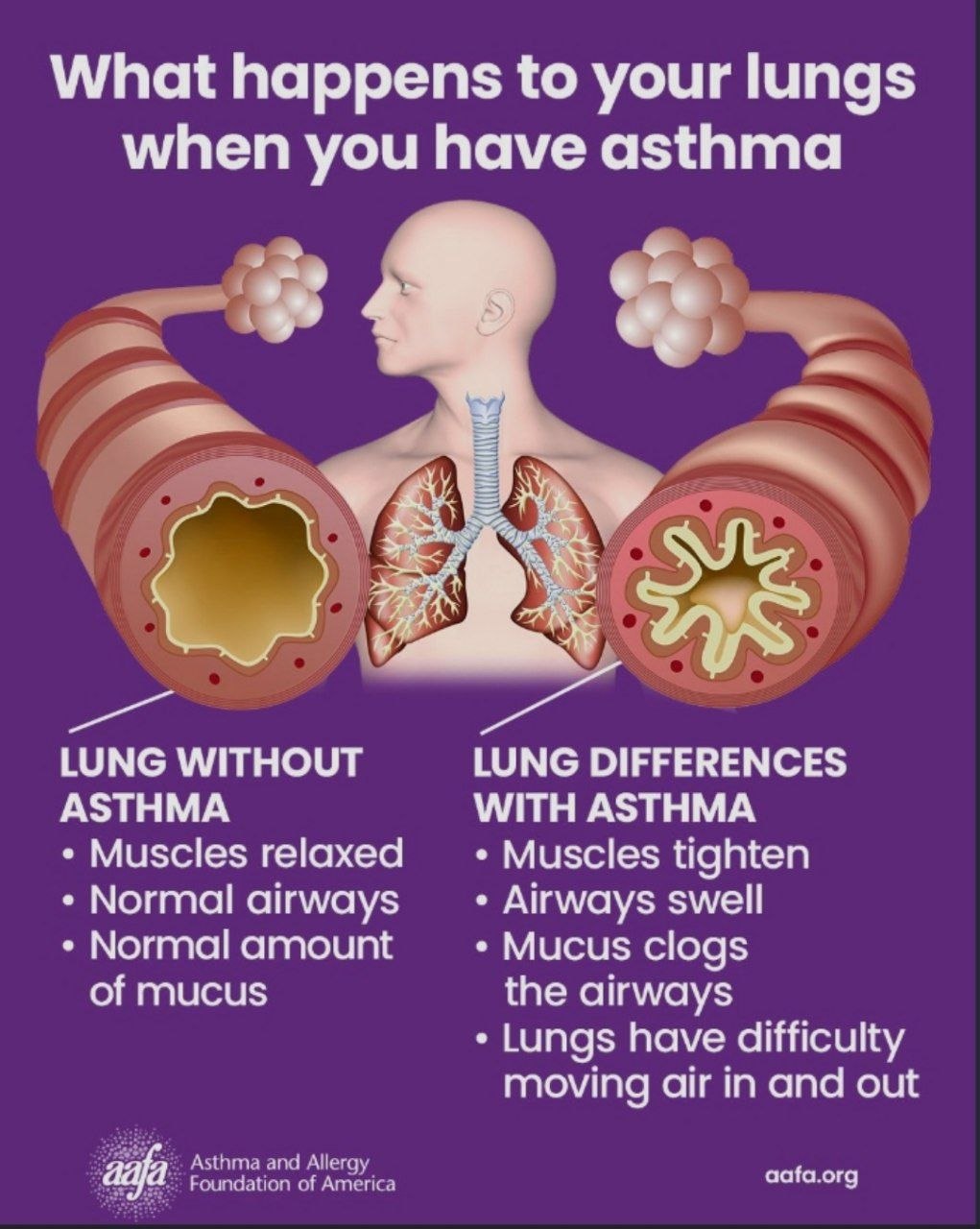
Note. From What happens to your lungs when you have asthma?, by Asthma and Allergy Foundation of America (2026), https://aafa.org/asthma/asthma-facts/